Mytocel MSKUnited Kingdom
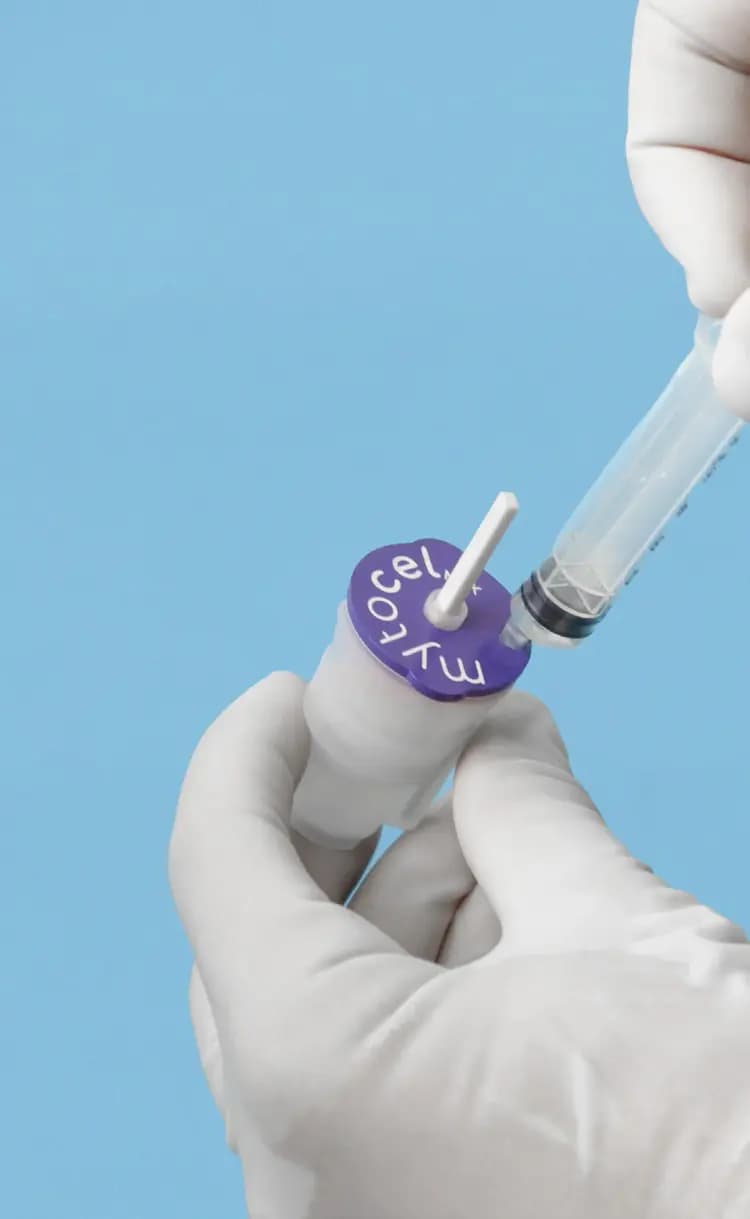
Gloved hands preparing the Rigeneracons device in a clinic

The evidence, in plain English

What the studies found, and what they cannot tell you.

Every study behind Mytocel MSK® is listed here in plain English. Doctors have studied this technology in small groups of patients, followed for up to three years. The studies are small and none compared it against another treatment, so they show what happened to those patients rather than proving it works for everyone.

How to read this

Small studies can describe what happened to a few people.

The studies below are small, and none compared the treatment with another option. They show what happened to the people in them. They cannot promise what will happen to you.

Evidence pyramid, top to bottom: Randomised controlled trials (none published); Prospective clinical series (n = 8 to 10); Preliminary reports; Pre-clinical models; Mechanistic characterisation. Highlighted: Prospective clinical series (n = 8 to 10).Randomised controlled trialsnone publishedProspective clinical seriesn = 8 to 10Preliminary reportsPre-clinical modelsMechanistic characterisation
Where the evidence sits today: small prospective series, no randomised trial yet.

The studies

What happened to the people in the studies.

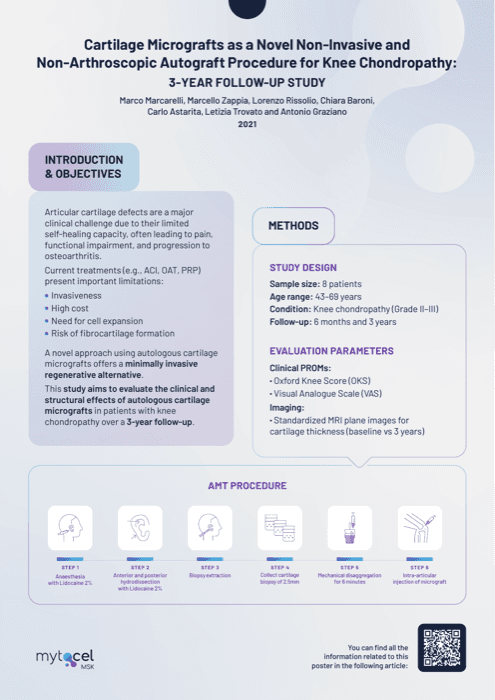
Cover of the plain-English summary of Marcarelli 2021, three-year knee series
Marcarelli 2021, three-year knee series
Peer-reviewed clinical

Marcarelli 2021, three-year knee series

Prospective uncontrolled case series · n = 8 · Follow-up: Six months and three years · OKS, VAS, MRI cartilage thickness

In a three-year study of eight people, pain scores fell from about 5.5 to about 1.8 out of 10 within six months, and the benefit was reported to last three years.1

Limitation: Uncontrolled series of eight patients with no comparison group; MRI cartilage thickness at three years was reported for three patients only and was mixed.

Disclosure: Three authors are employees of the technology developer.
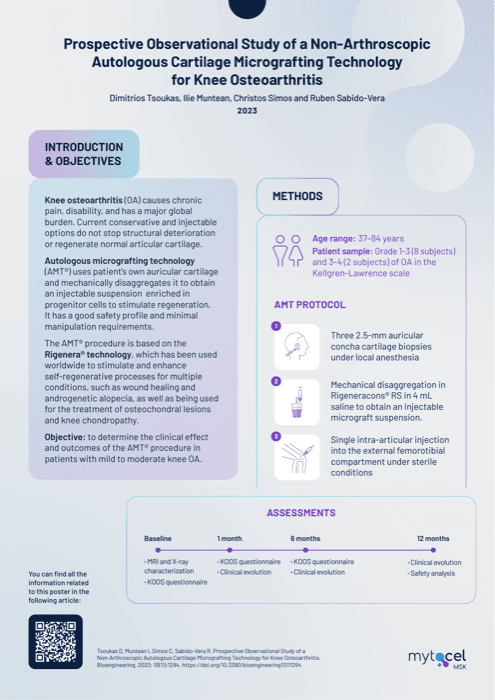
Cover of the plain-English summary of Tsoukas 2023, prospective knee osteoarthritis study
Tsoukas 2023, prospective knee osteoarthritis study
Peer-reviewed clinical

Tsoukas 2023, prospective knee osteoarthritis study

Prospective open-label observational study · n = 10 · Follow-up: Twelve months · KOOS (five subscales)

In a ten-person study, people reported less pain and better function at one and six months.2

Limitation: Open-label with no control group; ten patients; the authors themselves call for larger randomised evaluation.

Disclosure: Medical writing funded by the manufacturer; kits supplied.

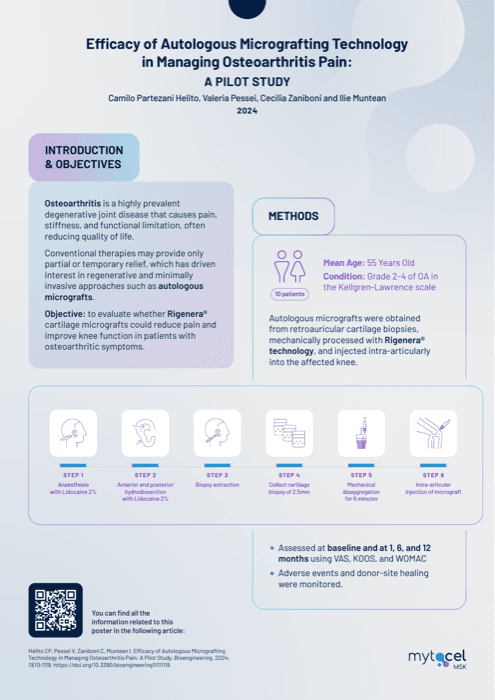
Cover of the plain-English summary of Helito 2024, twelve-month pilot study
Helito 2024, twelve-month pilot study
Peer-reviewed clinical

Helito 2024, twelve-month pilot study

Pilot prospective observational study · n = 10 · Follow-up: Twelve months · VAS, KOOS, WOMAC

Another ten-person study followed people for a year and reported improvements in pain and function.3

Limitation: Uncontrolled pilot of ten patients with no comparison group.

Disclosure: No external funding declared.

In an early study of nine people with cartilage damage in the knee, eight reported less pain and better function.4

Scans

What the scans showed.

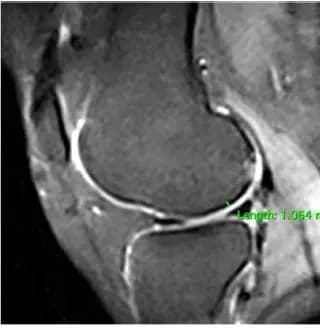
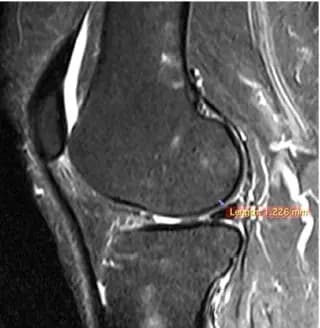
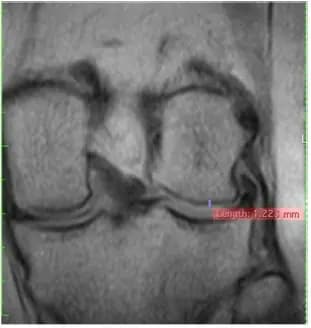
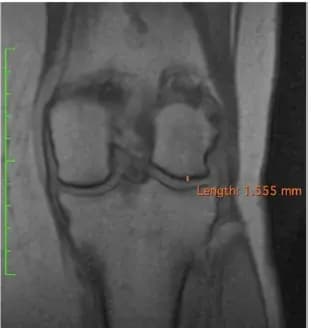
Scans in three of those patients showed thicker cartilage in two of them and thinner cartilage in one. The scans shown here are from one of the two people whose cartilage measured thicker.1

Knee MRI, side view, before treatment
Side view, before
Knee MRI, side view, three years after treatment
Side view, three years
Knee MRI, front view, before treatment
Front view, before
Knee MRI, front view, three years after treatment
Front view, three years

Side effects

Side effects, as reported in the studies.

Because it is your own tissue there is no donor material and no rejection. In the published studies, covering 37 people, no serious side effects were reported, though every injection carries some risk.4123

Still being studied

What the studies cannot yet tell you.

No treatment for arthritis is guaranteed, and this one is still being studied.

Your clinician decides

Whether it suits you is decided by the clinician who examines you and looks at your scans. Actomed does not assess patients.

Studies mentioned on this page

  1. 1.Marcarelli M, Zappia M, Rissolio L, et al. Cartilage micrografts as a novel non-invasive and non-arthroscopic autograft procedure for knee chondropathy: three-year follow-up. J Clin Med. 2021;10(2):322. View source
  2. 2.Tsoukas D, Muntean I, Simos C, Sabido-Vera R. Prospective observational study of a non-arthroscopic autologous cartilage micrografting technology for knee osteoarthritis. Bioengineering. 2023;10(11):1294. View source
  3. 3.Helito CP, Pessei V, Zaniboni C, Muntean I, et al. Efficacy of autologous micrografting technology in managing osteoarthritis pain: a pilot study. Bioengineering. 2024;11(11):1119. View source
  4. 4.Dorta Fernández A, Baroni Luengo A, et al. Biostimulation of knee cartilage using autologous micrografts. Rehabilitation Science. 2018;3(1). Reproduced in the Mytocel MSK scientific studies booklet, p. 43. View source

Find a clinic that offers Mytocel MSK

Actomed supplies and trains UK clinics; it does not assess or treat patients. A clinic can arrange an assessment, and being seen is not a decision to have any particular treatment.